Projects Needing Assistance

South Sudan: Starting at the Bottom
While South Sudan sit proudly at the top of the list as Africa’s newest nation, it is at the very bottom of the world’s quality-of-life listings. Poverty, illiteracy, disease and malnutrition define the human condition in South Sudan. While the international community and many NGOs have participated in bolstering services for South Sudanese, the country’s networks and infrastructures providing basic human services are still lacking.
To assist in building of South Sudan’s human capacity, La Salle International has been supporting the efforts of Solidarity with South Sudan, which is successfully offering educational, health and pastoral services. Solidarity with South Sudan currently has operational facilities in Juba, Wau, Malakal, Riimenze and Yambio, and satellite offerings in Leer, Nzara, Kosti, Renk and Bentieu. The staff, largely consists of consecrated religious male and females who typically have had previous missionary experience and who are experts in their field. The Solidarity teachers at the Catholic Health Training Institute (CHTI) in Wau are board certified and fully credentialed Medical Doctors (MD) and Registered Nurse (RN) trainers.
The organization strives to create self-sustainable teacher training and health-care institutes which eventually will be run by the Sudanese themselves. Solidarity with South Sudan does not discriminate with regards to tribal affiliation, geographic origin, religion, or sexual orientation. All programs operate under a collaborative memorandum of understanding with the appropriate national certifying authorities such as the Government of South Sudan Ministry of Education, Science and Technology and Ministry of Health.
The Catholic Health Training Institute in Wau produces qualified professionals who can assume leadership roles in the provision and management of the national health care services in the Sudan. The initial program which focuses on training nurses, offer them intensive training in midwifery. At the request of the South Sudan government, a registered midwifery program has began at the CHTI. in January of 2012.
The Soldarity teacher training programs began in 2008. To-date, Solidarity has trained over 1,700 teachers. To accomplish this, teacher in-service programs have been delivered in Malakal, Juba, Yambio, Nzara, Renk and Leer. New facilities in Malakal and Yambio will extend the Solidarity Teacher Training College program from in-service programming to include a two year pre-service training curriculum. Currently, Solidarity offers one of the largest teacher training program in the country.
The third strand of Solidarity commitment in Sudan began in mid-2010 with programs in the area of Pastoral Services. The objective of this component of Solidarity operations is to deliver formation and support programs that assist the Sudanese people in their quest for peace and reconciliation. This goal is particularly relevant as South Sudanese move towards establishing themselves after emerging from decades of civil strife. This program has already sponsored an internationally successful pastoral initiative, “101 Days of Prayer Towards a Peaceful Referendum in Sudan,” and has sponsored highly successful peacebuilding activities for key diocesan administrators.
Solidarity is also active in teaching farmers new agricultural techniques and crop variation. In South Sudan, many of the people have long histories of living in farming tribes. Unfortunately, during the decades-long civil war, these individuals were constantly displaced and important agricultural knowledge was not passed down to subsequent generations. As a result, today these people are located in some of the most fertile areas of Africa yet are unfamiliar with how to manage the earth for their food needs. Accordingly, Solidarity is working with local groups to provide farmer education programs which will increase their agricultural skills, techniques, productivity, and crop variety.
A truly inter-congregational effort, Solidarity currently has 27 full time staff on the ground in Southern Sudan representing 19 different religious congregations and 17 different nationalities. A number of volunteer religious and laypersons are assisting with the project. Over 180 Roman Catholic religious congregations are united in contributing to the vital work of Solidarity with South Sudan through generous fiscal support and/or allocation of talented human resources.
Contributions in support of this challenging and important work can be made through this website (press the “Support Our Work” button on the top right.)
[Photo Courtesy of IRIN]

Sri Lanka: Henamulla Pre-school provides a welcomed start to education
The Henamulla Pre-school enrolls 160 children aged 2.5 to 5.5 years old from 8:30 to 12:00 every weekday. The school is physically located just a few meters away from a large solid waste landfill which receives the garbage of the capital city of Colombo. The children that attend the school live in the slums adjacent to the dump.
The school provides clothes, food and education for the children in a safe and clean evironment. There are several different classrooms for the instruction of the children which is done in two different languages for each grade level.
Families whose children attend the school are asked to pay a monthly tuition of 100 rupees [approximately 1 dollar US], but many cannot afford even this very modest sum. All children get a hot meal for lunch before departing for the day. Drawing from the local population, the majority of students are Muslim.
Through La Salle International, a donor has provided funds for electrical needs of the school; our sister foundation in Australia (The Lasallian Foundation) has been very generous to this project, providing food and clothing subsidies. Funds are still needed for educational sponsorship, supplies and building mainenance. The kids greatly enjoy being at the school and there is a good energy between the students and the teachers.

IALU: Surrounding the world with university and professional education
The International Association of La Sallian Universities (IALU) is a consortium of higher educational institutions around the world. The 74 member institutions provide a variety of undergraduate, graduate and professional (law, medicine, engineering) degrees and programs. Each of the institutions has functional specialities which respond to the needs of the local area; all of them have quality undergraduate education. In IALU schools, teaching is “job one” so all of the professors are primarily evaluated on their capabilities in the classroom.
University education in the IALU system extends throughout 5 continents. Collaborative work among the universities is common. As such, students in one university can elect to take classes or study abroad at other universities, and through this linkage of professional talent and outstanding teaching, the consortium makes up one of the most powerful higher educational networks in the world.
Students from less developed countries are assisted by scholarships from donors who understand the importance of a global education. These generous donors seek to provide these students with access to this opportunity which is so professionally rewarding and personally transformative.

Colombia: Project Utopia Builds Agricultural Leadership
Through Universidad De La Salle in Colombia, “Project Utopia” engages high school alumni from Colombian rural areas affected by violence and poverty. Students become Agricultural Engineers through a creative “hands on” program in which best practices are taught in the field by knowledgeable instructors. Besides learning farming operations, students become leaders for social and political transformation in field production
entrepreneurship at their places of origin.
Students come from deep Colombia – where employment opportunities are scarce, poverty is common, and where continual pressure is exerted from armed groups to join their ranks. They are relocated to safety and security of the campus of Universidad De La Salle. There, they recover faith and hope in themselves. The program is designed to build their self-esteem, to awaken their goodness and solidarity, and give them an outstanding technical and scientific education. Ultimately, they will be the professionals which contribute positively to the reconstruction of a new country.
The Project’s enormous challenges range from dealing with students’ psychological
and social conditions to the urgency of achieving national and international funding
which can sustain the program.
The specific objectives of the program are:
- To provide students with agricultural training for sustainable agricultural conversion and preservation of the biodiversity of the Colombian Amazorinoquia and other rural areas.
- To create and transfer knowledge in order to enable the improvement of economic, social and nutritional conditions of the rural Colombian.
- To promote agricultural production around associations and cooperatives of producers to achieve field technical production.
- To train leaders for social and political action to promote democratic values and to foster the reconstruction of the social fabric.
For more information about this program which builds human capacity in Colombia’s youth, click here.

India: Reaching The Unreached
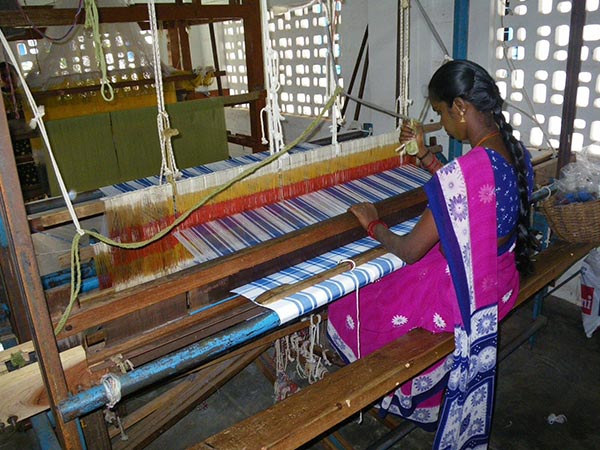
Beginning in 1974 with a small program for boys, Reaching the Unreached (RTU) has evolved over the years into a comprehensive program to serve marginal populations in India. RTU is a comprehensive series of programs which offer a variety of services including, but not limited to: KinderCare, primary school education, home building (and associated construction trades for the homes which are pre-fabricated on the premises), textile work (see photo), dispensary and a facility for elderly health care and meals for the elderly who can’t cook for themselves.
The clinic which carefully monitors AIDS patients and leprosy affected individuals also provides after-natal training for mothers and diagnoses/treats about 160 people a day for a variety of illnesses. In the afternoon, the clinic becomes mobile and visits nearby villages whose people cannot make the travel to the center for health care. Additionally, the clinic serves about 400 elderly people who are too feeble to come to the clinic. The clinic also trains medical workers who animate local health communities by providing education in proper lifestyles and can make referrals to the clinic when necessary; these individuals dispense OTC medications when necessary.
Approximately 950 orphaned or parent-separated children are incorporated into a “village-like” program where 6-8 youth are housed with single mothers until they can live in a hostel. About 500 children stay with their house-mothers until 12 or 13 and then live in a hostel until they are 17. Due to space limitations, the program provides for additional children to be placed in homes in the area and payment is made for the homes to house the children on a per diem basis. RTU has 6 hostels which provide homes for 250 adolescents. A special house is kept for AIDS victims and a special child care unit has been set up to work with them. Of the 950 kids served through the program, about 10% are HIV+. HIV assistance (training, counselling, medications) is given to families.
A large cafeteria provides for the children’s needs and a hot mid-day meal is provides for approximately 2,000 whom live and work at the center; 750 additional meals are prepared for breakfast and dinner.
Part of the RTU program is also to build houses for the less fortunate. Using a production facility built on the campus, and a stardard for pre-fabrication, approximately 7,500 houses have been built (17’ x 17’) from cement bricks. Houses cost Rs 60,000 (about $1,500 USD) apiece to build.
A RTU mobile educational laboratory visits schools whose budget does not afford science lab equipment; this mobile unit stops and the schools and allows students to conduct experiments inside the unit.
There is a large volunteer group who assist with operations and approximately 400 people are employed by RTU, thereby providing significant assistance to the local poor area.

India: Boys’ Village provides a home for street children
Boys’ Village is a residential program for 87 orphan, abandonded and destitute boys aged 6-12 who are economically poor and who have shown poor performance in academics. It costs Rs. 1,200 per boy per month to operate the facility ($30 per boy per month).
The boys live in several different dorms which are managed by the boys themselves. They have regular activities on the weekend; during the week, they spend most of their daytime in school and their evenings in supervised study. All of these youth are individuals who otherwise would be out on the street. As such, the village cannot require students to pay tuition – all students are 100% scholarship need students.

Haiti: Primary and secondary school serves remote island population
Turtle Island (Ile de la Tortue) lies off the northern coast of Port-au-Paix, Haiti where small fishing and subsistence level farmers live on a year-round basis. Serving the needs of young children on this island, the Communauté Notre-Dame-des-Palmistes manages a secondary school and a primary school. The physical structures of the school have been provided by NGO donors such as the Lasallian PROYDE and ongoing operational support of the school requires continued assistance above the tuition base which cannot be met by most of the students. In other than financial ways, the local community of Haitians are very supportive of the school and frequently use the area for activities and gatherings, in addition to the educational work which is provided to the villagers regardless of one’s ability to pay tuition.

Ethiopia: Meki farm creates unique school-farm partnership
Meki, Ethiopia, is a place where the rural population is trapped in a vicious circle of lack of education and poverty. Though agriculture is the mainstay of the regional economy, it is based on old fashioned and outmoded techniques. As a result, the vast majority of farmers live in a context of subsistence economy.
In an attempt to help the local population through educational instruction and agricultural training, a unique school-farm partnership has been created. The educational center teacher the children of the town, while the agricultural center trains the townspeople in how to be farmers. In this way, the townspeople receive employement and agriculktural knowledge; profits from the sale of produce enable the children to attend the school at a very low — and often free — tuition rate.
The center consists of a large farm (60/80 hectares) to allow for field practicing and for the introduction of new crops. This project which combines farming in one location with classroom based youth education is a viable response to the general policy required by the international agencies who request the beneficiaries´ self-sufficiency for their projects. The agricultural center consists of classrooms; stables; workshops; winery; cheese and yogurt processing. The project also envisions the cultivation and processing of farm products: dairy products; wine; marmalades from different kinds of fruits…and the processing of tomato sauce. All these products will be for national and international markets
The school which is assisted through these sales is Meki Catholic High School. This school is operated in the town of Meki and receives approximately 800 children, many of who can not pay for their tuition. Subsidies from the farm help to provide scholarships for the students.

Ivory Coast: Abobo Project Welcomes Destitute Youth
This project focuses on street children between 8 and 15 years of age who have be disassociated from their families. The children are welcomed from the local area where they are found running free in the streets, often getting into trouble and running drugs. The area is a very poor area with garbage in the streets and poor shanties for the local people.
The Abobo campus consists of a series of small dormitories for 8 children and a counselor in which each student is given his own bed and closet. The children are typically here for about 3 years before they are placed back into their own homes, or homes of relatives.
The facility is set up in a village like arrangement, with very nice dormitories surrounding a central meeting area. The grounds have facilities for soccer and other sports; a library is currently being constructed which will replace the other, smaller and dysfunctional library on campus.
The school has approximately 50 street children. Efforts are made to associate them with the families and, where possible, to place them in the public school system. When this is not possible, tutoring of the students occurs on campus.
The students are responsible for the maintenance of the property which includes helping to serve the food, keeping the floors and tables clean, working in the garden, etc. Medical attention is given to the students through the services of a nearby religious congregation of Roman Catholic sisters who are involved in medical ministries.

Burkina Faso: CLIMA Provides Skills to Agricultural Families
Located in Beregadougou, Burkina Faso, Project CLIMA is a successful agricultural training center for young families. The goal of the project is to train 24 families of farmers (with wives and children) how to farm productively, utilize the most modern techniques, and become financially self-sufficient. The program admits married couples less than 30 years of age who have farms of their own and who wish to spend two years training of agricultural training at the CLIMA. This agricultural project is modeled on a successful TAMI Project in northern Togo. CLIMA involves 60 hectares of land on the main farm and 100 hectares at a satellite location 12 km away.
There are three workshops on the property: carpentry, mechanics, and clothing (sewing). The property also has a stable for 6 steer, a chicken coup, 2 classrooms, living space for teachers, a store room, and a garage for farm equipment. A former set of aquaculture ponds exist on the property and some of them are being used currently for rice production. Both men and women receive instruction in how to manage a farm.
Because the families come with their children, there is need to have a child care center for the youngsters. Mothers assist with this and keep the kids busy inside with some instruction and outside playing on the grounds. At this point, there are 34 children on the grounds; only four go to school at the public school. Two full time child care women oversee this child care center.